Common COVID writing mistakes (and how to fix them)
Should COVID be in all caps? Is it quarantine or isolation? Learn how to write about coronavirus correctly


It's been over six years since the COVID-19 pandemic entered our lives. The fundamental changes the disease wrought upon our lives were truly mind-boggling—more than 7 million deaths, lockdowns and border closures, a huge mental health toll, disruption to supply chains and product shortages (not least toilet paper), and huge economic damage.
There was another aspect of life that was significantly affected by COVID-19: the English language. The pandemic brought a plethora of words and phrases into common usage—some entirely new, some previously reserved for scientific and academic circles.
However, many people are still confused about the proper use of COVID-related terms. So we wrote this guide to clear up the most common COVID-19 writing mistakes, whether you're drafting a news article, an academic paper, or a workplace email.
- SARS-CoV-2 = the virus; COVID-19 = the disease/illness it causes.
- WHO preferred capitalization: COVID-19 (all caps); Covid-19 is also acceptable per some style guides.
- Quarantine = suspected exposure (precautionary); isolation = confirmed infection.
- COVID-19 vaccine brand names are proper nouns: Pfizer, Moderna, AstraZeneca, Novavax, etc.
Is it COVID-19, coronavirus, or SARS-CoV-2?
Most people use COVID-10 and coronavirus interchangeably, but they're actually not synonyms. Here's what each term refers to:
| Term | What it refers to | When to use it |
|---|---|---|
| Coronavirus | Any virus from the broader coronavirus family, which includes viruses that cause common colds, SARS, and MERS. Named for the crown-like spikes on their surface. | Informal or general writing when precision isn't required; also acceptable as shorthand for the COVID-19 pandemic |
| SARS-CoV-2 | The specific virus that causes COVID-19. Technically, a SARS-CoV-2 test (not a "COVID test") is what you receive at a clinic. | Formal, scientific, or academic writing where you need to distinguish the virus from the disease |
| COVID-19 | The respiratory illness caused by SARS-CoV-2. The name is an acronym: COronaVIrus Disease 2019. | When referring to the disease, symptoms, or illness; preferred in most general-audience contexts |
Is it OK to use COVID-19 and coronavirus interchangeably?
The good news is that it’s become acceptable to use ‘the coronavirus’, ‘COVID-19’ or simply ‘COVID’ interchangeably, especially in informal writing. Most people will understand what you’re talking about if you use any of these words. However, if you’re drawing a distinction between the virus and the illness, it’s best to do so as follows.
- When talking about the virus: use ‘the coronavirus’, ‘SARS-CoV-2’ or ‘the virus that causes COVID-19’
- When talking about the disease, illness or symptoms: use COVID-19
You should definitely use the correct terminology if you’re writing in a formal register, or for academic or scientific audiences.
Should COVID-19 be in all caps?

You may also see COVID-19 written as Covid-19. While the first version (capitalized) is preferred by the World Health Organization (WHO), both are acceptable and usually come down to the style preference of the publication or organization for whom you are writing. For example, the Guardian uses Covid-19, because its preference is to:
“use uppercase for abbreviations that are written and spoken as a collection of letters, such as BBC, IMF and NHS, whereas acronyms pronounced as words go upper and lower, eg Nasa, Unicef and, now, Covid-19.”
If there’s no style guide preference, it’s generally best to default to the WHO-preferred COVID-19.
How should you refer to COVID-19 variants?
The coronavirus has mutated into several new variants or versions over time. While initially they were referred to by variant numbers (like B.1.1.7) or by where the variant originated, each specific variant of the coronavirus is now assigned a letter of the Greek alphabet by the WHO. The current major variant in the US is Omicron.
A few style rules to keep in mind:
- Use the WHO-assigned Greek-letter names (Delta, Omicron, etc.) rather than alphanumeric codes, unless writing for a scientific audience.
- Whether to capitalize variant names depends on your style guide; both "Delta variant" and "delta variant" appear in major publications.
- Don't use country-of-origin labels for variants (e.g., "the South African variant"), as this is frowned upon by the WHO.
Are you in quarantine or isolation?
The terms quarantine and isolation are often used interchangeably. They actually refer to two different reasons for being confined to your own home for days on end. The distinction is as follows:
- Quarantine refers to staying at home if you only think you’ve been exposed to the coronavirus—for example, if you are a close contact of a confirmed case. It’s a precaution in case an infection manifests.
- Isolation refers to being under house arrest because you know you’re infected, usually via a positive test result.
These terms shouldn’t be used interchangeably in anything but informal writing. You may even see the particularly Australian abbreviation ‘iso’ pop up in very casual writing.
How to refer to COVID-19 tests (PCR, RAT, and antibody)
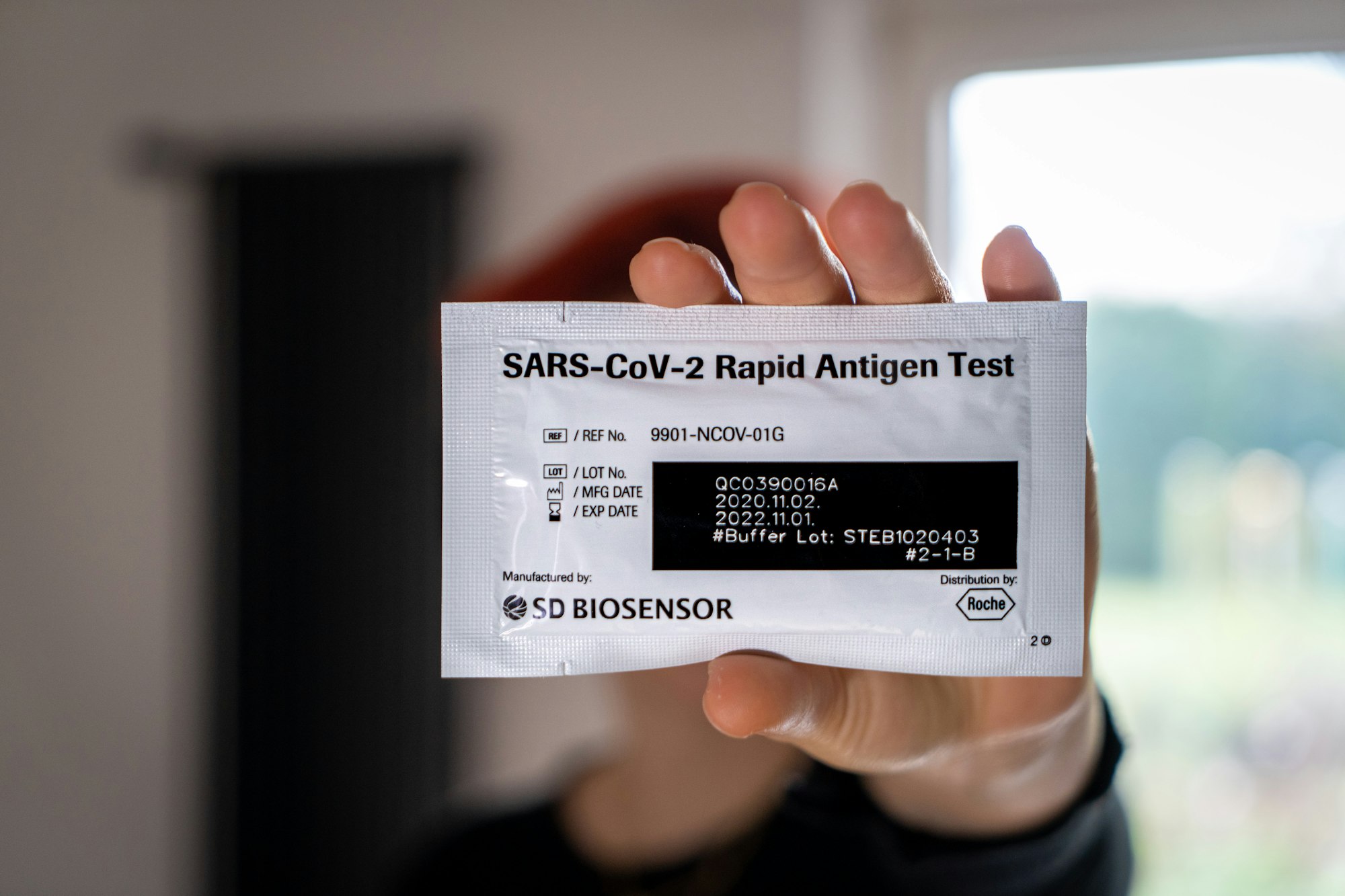
The ubiquitous ‘nose swab’ is something we’ve probably all become far too familiar with for the last couple of years. These can be called a coronavirus test or COVID-19 test in general writing. However, avoid using COVID-19 test when writing formally or for academic/scientific audiences (use coronavirus test or SARS-CoV-2 test instead).
There are three main types of coronavirus tests:
| Test type | Description |
|---|---|
| Polymerase chain reaction (PCR) test | The most sensitive test, this looks for the virus's genetic material and reproduces it in a lab until it's detectable by a computer. The test involves a nasal swab and/or sometimes saliva. Results can take a day or two, or longer. This should be referred to as a PCR test; it can also be called a lab test. |
| Rapid antigen test (RAT) | This test looks for proteins found on the surface of the coronavirus, rather than the virus itself. It isn't as sensitive as a lab test, but can be done at home. Rapid tests are usually done with a nasal swab and take about 15 minutes to yield results. These should be referred to as a rapid test, home test or RAT. Do not use ‘RAT test’—this is a tautology. |
| Anti-body test | The third type of test checks for antibodies to the coronavirus, a sign that a person had an infection in the past or received a vaccine to spur immunity. These are usually just called ‘antibody tests’. |
COVID-19 vaccine terminology and brand spelling rules
The language around vaccination may be second only to that around coronavirus: indeed, ‘vax’ was the Oxford Dictionary’s word for 2021!
You should use the terms coronavirus vaccine or COVID-19 vaccine when talking about vaccines, not anti-coronavirus vaccine or anti-COVID-19 vaccine. The terms immunization and vaccination can generally be used interchangeably. Note that immunization is spelled ‘immunisation’ in British and Australian English.
Vaccine manufacturer names should be spelled as follows:
- Pfizer
- AstraZeneca
- Moderna
- Novavax
- Sinopharm
- Sinovac
- CanSino
- Johnson & Johnson
More FAQs
Is it OK to use terms like ‘vax’, ‘fully vaxxed’ and ‘anti-vaxxer’?
The colloquialisms ‘vax’ and ‘vaxxed’ are okay to use in informal writing, but should be avoided in neutral and formal writing (unless part of a direct quote). The phrase ‘anti-vaxxer’ is quite inflammatory: it should be used with caution.
Can I use "long COVID" without a hyphen?
Both "long COVID" and "long-COVID" appear in published writing, and style guides haven't fully settled this one. The majority of major outlets (including the WHO and the New York Times) use "long COVID" (no hyphen) as a noun phrase. If it's used as a compound modifier before a noun (e.g., "a long-COVID patient"), a hyphen is more defensible.
Is "COVID-19 pandemic" redundant? Can I just say "the pandemic"?
In most contexts, "the pandemic" is fine after the first reference. "COVID-19 pandemic" on first use establishes which pandemic you're discussing, especially in writing that may be read years from now or in any context where clarity matters.
Further information
These are just a few of the words and phrases that the coronavirus has introduced into our vocabulary. Check out our A-Z of coronavirus reference guide for more common terms and how to spell them.
For more on the principles of writing for different audiences, check out our blog post on writing formality. Outwrite's paraphrasing tool can also help you rewrite sentences to make them more or less formal. Just highlight a sentence, choose a goal, and we'll suggest a list of alternatives. Head to our site to give it a go!